the vision
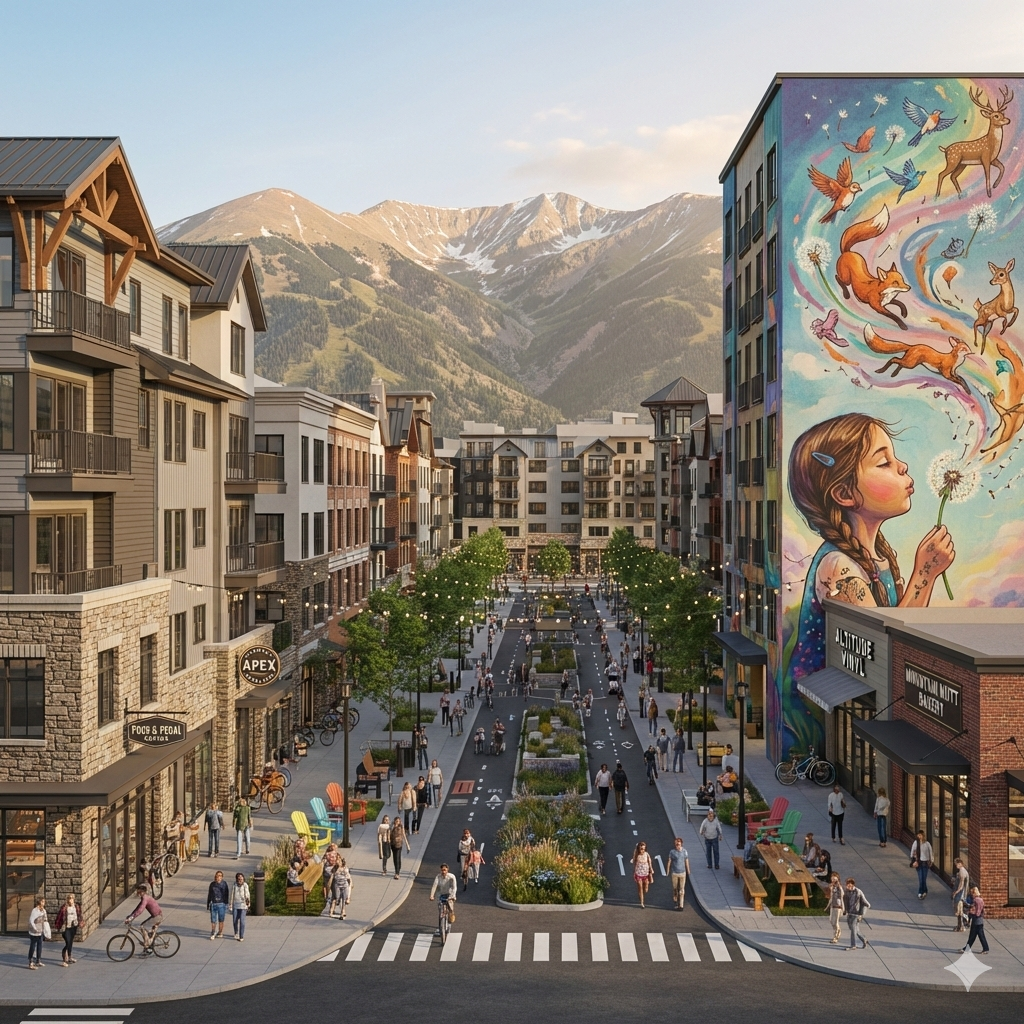
main street, novus — a pedestrian-first boulevard designed around people, not cars
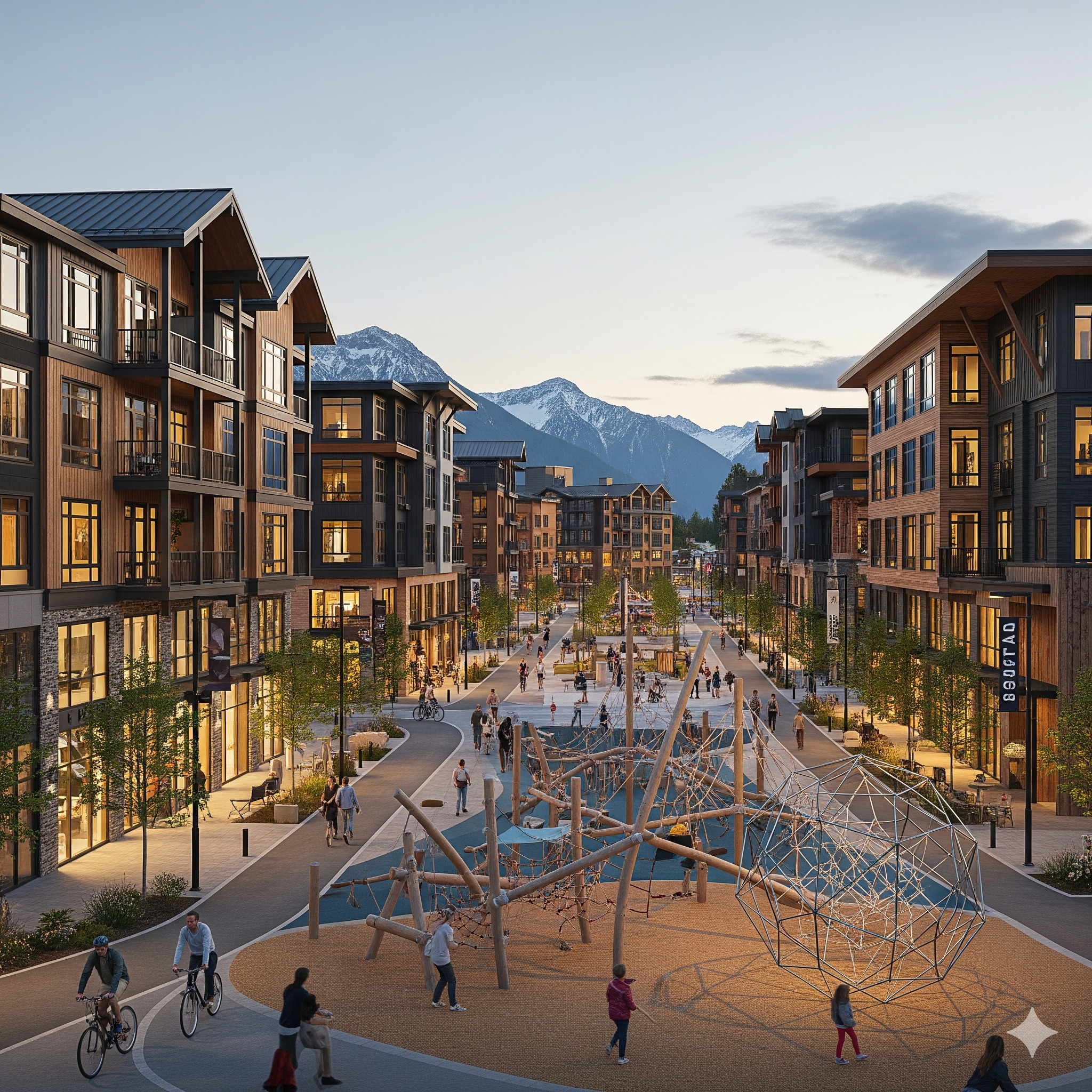
central plaza at dusk — active ground-floor retail, residential above, public space in between
we're building a new city on upgraded democratic hardware — where citizens govern by jury, not by campaign, and where the rules actually work for everyone who lives there.
randomly selected citizens hold real governing power. no dynasties, no donors, no demagogues. just people, deciding together.
l.v.t., public transit, and pigouvian pricing — proposals shaped by residents, not lobbyists.
"what if better-functioning municipal government
were a business model?"
— the question that started all of this
this project grew out of nearly 20 years of electoral reform work — specifically, the campaign to replace plurality voting with approval voting across american cities. the results were real: fargo, north dakota passed it with 64% of the vote. st. louis, missouri hit 68%. these weren't flukes. better voting systems, when explained clearly, win broad support.
but something kept getting in the way. the two-party system doesn't just shape elections — it shapes the entire political environment those elections live inside. even with better ballots, you're still operating in an ecosystem built to resist change. reform after reform stalls not because people disagree with it, but because the machinery around it is designed to absorb and neutralize it.
the deeper problem: approval voting is esoteric. we could explain the math. we could win the argument. but we were asking people to care about electoral mechanics — and most people, reasonably, don't. that's not a flaw in the voters. it's a flaw in the strategy.
nobody buys a smartphone because they understand advanced electrochemical processes. they buy it because it works longer, charges faster, and doesn't let them down. the battery is the magic ingredient — not the product. we realized that better electoral procedures need to work the same way: invisible, foundational, and quietly making everything else possible.
the question became: where could sortition and score voting operate as infrastructure — embedded so deep in the system that residents benefit from it without having to understand or advocate for it?
every year, developers break ground on thousands of new housing projects across the country. master-planned communities, mixed-use developments, new subdivisions. they compete on amenities: better finishes, better schools, better commutes. but nobody is competing on governance. nobody is offering residents a better operating system.
we think that's a gap — and a real business opportunity. a city with a structurally better decision-making process won't buckle under growth. it won't calcify around the preferences of whoever got there first. it won't be captured by a donor class or a political dynasty. it will just keep working. and that, it turns out, is an extraordinarily rare thing to be able to offer people.
began the long work of researching and advocating for approval voting as a replacement for plurality systems nationwide.
first u.s. city to adopt approval voting in a binding municipal election. proof that reform could win at the ballot box.
second major city win, this time in a democratic primary with national visibility. the method worked. the ecosystem resisted anyway.
the insight that changed the strategy: better governance works best when it's the foundation, not the product being sold. this city is that foundation.
the value locked inside a city isn't just its buildings — it's the quality of its decisions. when governance fails, residents leave. when residents leave, property values collapse. when a reformer cleans things up, values recover. then the next guy comes in and the cycle starts again.
this isn't a political story. it's a massive, recurring destruction of wealth that conventional city-building accepts as background noise. we think it's the central risk that real estate investors have been systematically underpricing for decades — and the central opportunity we're here to eliminate.
every developer already prices in the "amenity premium" — good schools, safe streets, walkable blocks. those features command real, measurable rent and sale price differentials. governance quality is simply another amenity, and by far the most durable one available — if it's structural rather than personality-dependent.
the problem with detroit, new orleans, and providence isn't that good governance is impossible. it's that good governance was always tied to a specific person holding a specific office. remove the person and the governance collapses with them. the value that took years to build dissipates in a single election cycle.
a citizen jury selected by lot can't be captured, can't be bought, and doesn't retire. it is, structurally, the permanent version of the reform mayor — without the risk of what comes next.
most city charters fail because they embed the preferences of whoever wrote them — and make those preferences nearly impossible to change. ours does the opposite.
the single non-negotiable at the heart of this project is election by jury: a randomly selected panel of residents who hold genuine governing authority. this is sortition — the classical athenian alternative to elections — adapted for a modern municipality.
the genius is what it avoids. you don't need to agree on l.v.t. or bike lanes or zoning to move here. you just need to trust that a randomly selected panel of your neighbors will reach good decisions. that's a remarkably low ideological barrier to entry.
jury members are drawn by lot from the adult resident population — like jury duty, but for city governance. no campaigns, no fundraising, no name recognition required.
the jury hears from technical experts, advocates, and affected residents before deliberating. it's informed decision-making, not just polling.
the jury's decisions carry legal weight. it sets city policy, resolves disputes, and can override bureaucratic inertia. it isn't advisory — it governs.
the jury isn't a standing body of career politicians. it convenes for a defined deliberation, reaches its decision, and disbands. no permanent class of rulers, no entrenchment, no dynasty. the next jury is drawn fresh when needed.
you don't need residents to share an ideology. you need them to trust the process. a citizen jury provides that trust — it's the constitutional immune system that lets the community evolve without fracturing along political lines.
if you're drawn to land value taxes (l.v.t.), walkable streets, expansive bike infrastructure, and pigouvian taxation that prices pollution and congestion honestly — this place is being built with you in mind.
these aren't requirements for residency. they're the starting proposals our founding community wants to implement. the jury decides what stays, what goes, and what we haven't imagined yet.
tax the land, not the buildings. reward development, penalize speculation. the single most efficient way to fund public services while keeping housing affordable and productive.
streets designed first for people. mixed-use zoning, ground-floor retail, short blocks. the kind of neighborhood you can navigate without a car and wouldn't want to leave.
price the negative externalities honestly: carbon, congestion, noise. let market signals do the work of behavior change rather than mandates and bureaucratic enforcement.
protected lanes, cargo bike culture, and bike parking that rivals car infrastructure. cycling as a first-class mode, not an afterthought tucked into a door-zone stripe.
community land trusts and continuous ground leases — think renting land the way you'd rent a home, with no fixed end date — capture the value of public investment for public benefit rather than privatizing the gains from shared infrastructure.
separate the efficiency of markets from the level of redistribution. get both right. use efficient price signals everywhere — then redistribute broadly through dividends and public goods.
a direct cash dividend distributed to every resident — funded by l.v.t. and pigouvian tax surplus. no means test, no bureaucracy, no paternalism about how it's spent. the simplest form of redistribution is money.
a note on flexibility: every policy listed above is a proposal, not a mandate. the citizen jury has full authority to accept, modify, or reject any part of the city code through its deliberative process. we want residents who are excited by these ideas — not residents who are locked into them forever. the charter is the constitution; the code is the living legislation.
not every state makes it feasible to build a new city with genuinely novel governance. colorado does. the legal architecture is already in place — we just have to use it.
colorado's statutory and constitutional framework provides the lowest viable threshold for incorporation, the broadest home rule autonomy in the country, and explicit legal protection for alternative governance experiments. this isn't a workaround — it's the intended design.
a community of as few as 40 registered electors within a contiguous unincorporated area can petition for municipal incorporation. no supermajority, no legislative approval required — just 40 people and a patch of land.
in counties with 25,000 residents or fewer, just 40 registered electors can petition to incorporate a new municipality. in more populous counties, the bar rises to 150 — still a remarkably achievable number for a serious founding group.
c.r.s. 31-2-101colorado's article xx grants home rule municipalities authority over all matters of local concern, superseding state statutes wherever the two conflict.
colo. const. art. xxhome rule cities hold constitutional authority over land use and zoning — meaning we can design mixed-use, anti-sprawl urban codes without state preemption.
art. xx, §6colorado law explicitly protects the freedom of home rule cities to adopt novel governance mechanisms, including non-standard electoral and deliberative structures.
c.r.s. 31-2-210every city started somewhere. ours starts with a gravel pad and a starlink dish — and a very specific plan for what comes next.
generate immediate cash flow. establish a low-impact presence. don't mention the city.
prove the architectural concept. build a transient population. identify the founders.
cross the legal threshold. file the petition. vote in the charter.
full-scale dutch urbanism. l.v.t. online. the city runs itself.
to bootstrap using the remote-worker-to-resident pipeline, you need to be within 90 minutes of a major hub. pure isolation kills the urban vibe. two counties emerge as leading candidates — each with a distinct theory of growth.
i-70 corridor. 45 minutes from denver. the pitch writes itself: "mountain life with a 40-minute commute." highest volume of phase 1 traffic. fastest path to 40 electors.
salida. 2.5 hours from denver, but its own gravitational field. attracts the pdx/bay area cohort ready to leave the city entirely — who want real density, not a weekend escape.
before you are a city, you are a development. the most dangerous hurdle is county zoning and parking requirements built for a different era. the workaround is structural, not adversarial.
this staged approach lets you build the sortition culture with a small group of highly aligned residents before opening to the general public under a fully established, legally protected charter.
how does this sequence align with your capital stack?
we're assembling a founding community. early members help shape the charter, select the site, and form the first jury. this is the ground floor.
no spam. just updates when things move forward.